
Garage Door Repair: Repair or Replace? How Princeton Heights Homeowners Decide
Spending $400 to repair a door is only a bad deal if the door has two more repairs behind it. Knowing that before you authorize the work is the entire point. The repair-or-replace decision in Princeton Heights rarely comes down to a single price threshold. It comes down to three things moving together: how old the door is, what kind of damage you’re looking at, and whether the existing hardware can carry the door forward. Get those three lined up and the answer usually makes itself clear. If you’d rather not sort through it alone, call (855) 799-9554 and we’ll walk you through it.
What’s the real break-even age for a garage door?
Most residential garage doors hold up well for the first half of their life. The depreciation curve gets steep somewhere in the back half. Around the 15-to-20-year mark, a steel door typically starts showing stress that goes beyond surface wear: torsion spring fatigue, panel bowing from repeated cycling, hinge and roller looseness that no amount of adjustment fully resolves, and paint that’s failing because the substrate underneath has begun to give. None of that means the door is finished. It means every repair from here forward is buying time, and you should know how much time you’re buying.
In our experience, the math shifts at a particular point: when a repair bill reaches roughly a quarter to a third of what a new door would cost, and the door is already past that 15-to-20-year window, replacement usually wins over the long run. Below that threshold, or on a door with good structure and cosmetic wear only, repair is almost always the smarter spend. Princeton Heights has plenty of homes with doors from the 1990s and early 2000s still in daily service, and many of them have plenty of life left. Age alone never condemns a door. Age combined with what’s breaking tells the real story.
One more thing worth weighing: an older door paired with an original opener is a compound aging problem. The door might have five good years left while the opener is already past its window. We cover that scenario below.
Which damage types are repairable indefinitely – and which ones aren’t?
Some failures are chronic but manageable. Others are structural and no amount of repair schedules them away. Sorting your damage into the right column is the fastest way to a real answer.
Repairable indefinitely (with normal upkeep):
- Broken torsion or extension springs – a maintenance item, not a death sentence. Springs wear out on a schedule, and replacing them extends the door’s working life.
- Worn rollers, hinges, and bearings – inexpensive parts, straightforward swaps, and they address most noise and vibration complaints.
- Misaligned or bent tracks (mild) – realignable in most cases, especially if the cause was a single impact and not recurring.
- Failed openers or logic boards – replaceable across LiftMaster, Chamberlain, Genie, and Craftsman systems, including older units.
- Weather seal, bottom rubber, and trim – routine consumables.
Structural failures that compromise the door:
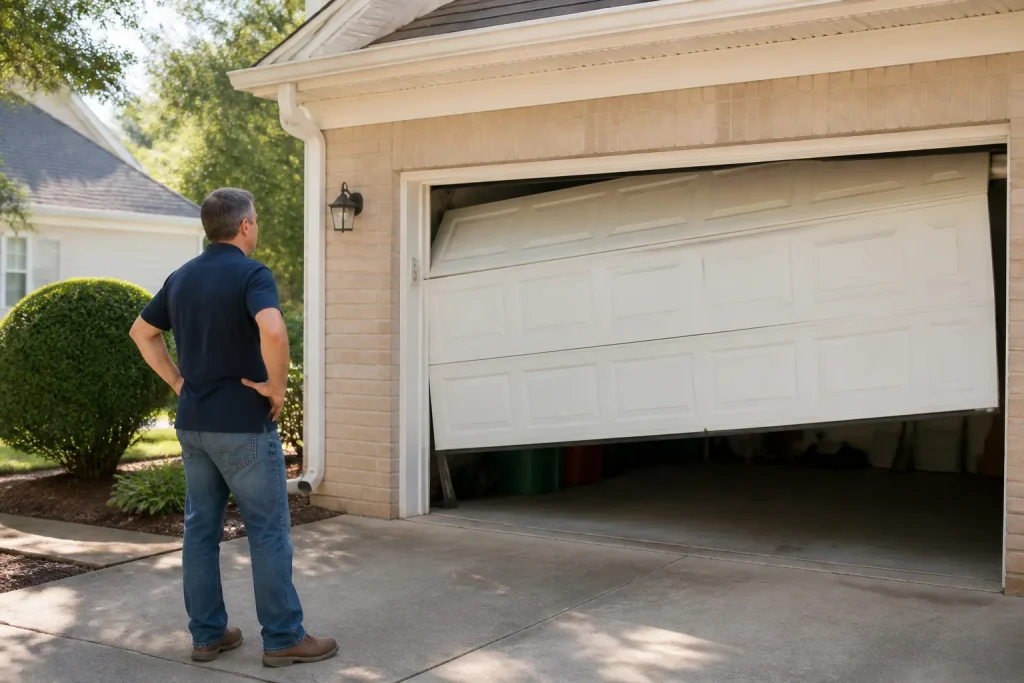
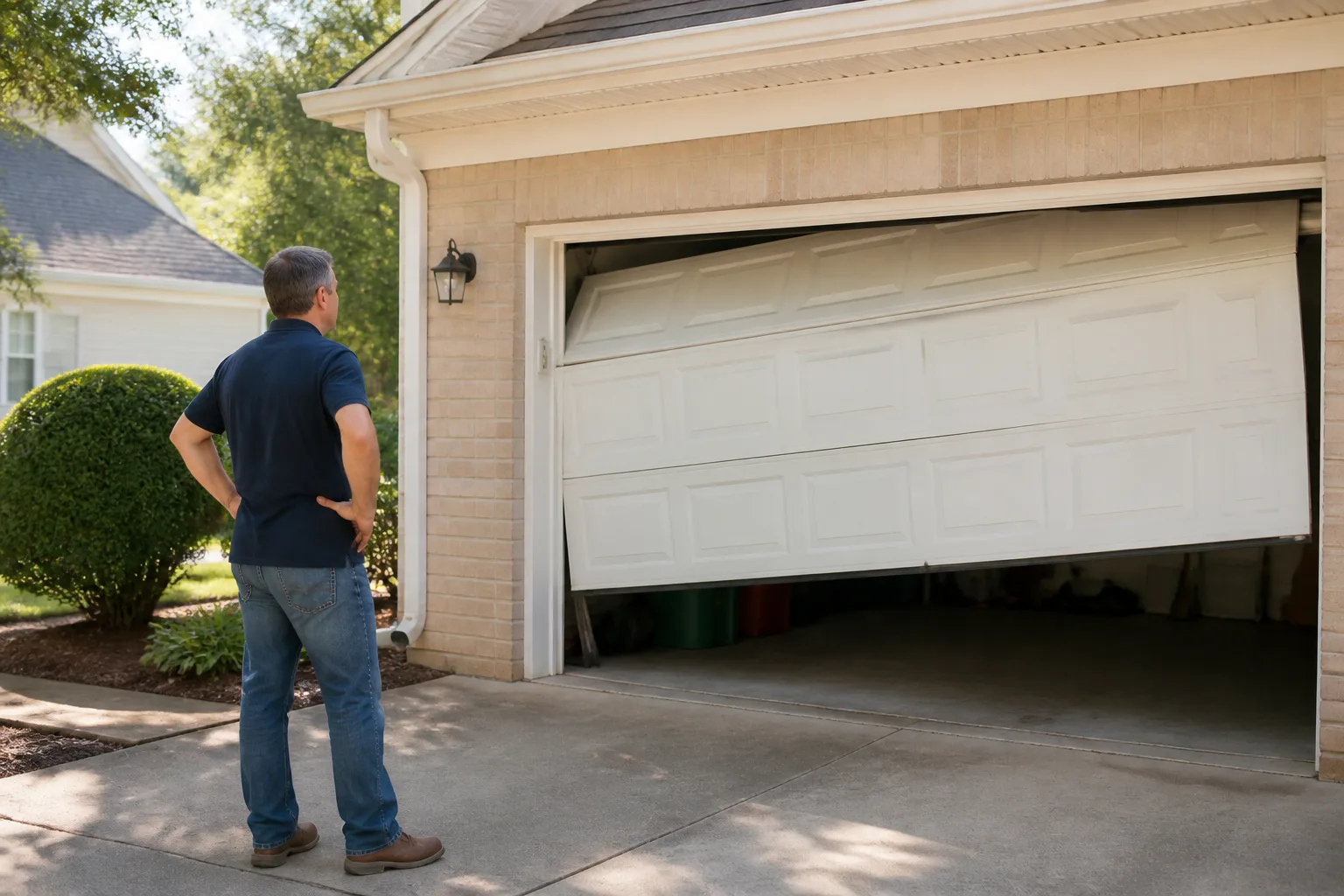
- Panels buckled from a vehicle impact or a door that’s been run into while partially open.
- Rusted-through panel seams along the bottom section, especially where water pools.
- Bowed or cracked sections from years of unbalanced operation – the door flexing every cycle because the springs weren’t sized right or the opener was dragging it.
- Sagging horizontal panels on wood doors with rot at the joints.
A single buckled panel on an Amarr or Clopay door can sometimes be replaced individually, which keeps the repair sensible. When the buckling spans multiple sections, the door has lost structural integrity and no repair will restore it. We’ve seen plenty of Princeton Heights doors where a homeowner was quoted a full replacement for what was actually a spring and roller job. Diagnosis matters more than the invoice total.
How do you evaluate the whole system – door, springs, and opener together?
Here’s where a lot of estimates go sideways. The door and the opener are aging on separate clocks, and a repair decision on one doesn’t automatically cover the other. The useful question is whether the hardware can carry the door through its remaining years without creating new problems.
Some common combinations in Princeton Heights homes:
- Door is solid, springs are due, opener is fine. Straightforward: replace the springs, check the balance, and go. A matched pair of springs is the usual approach, since a new spring paired with a fatigued one transfers stress to the older unit.
- Door is solid, springs are due, opener is 15+ years old. Worth replacing both at once. Fitting fresh springs to a tired opener just means the opener works harder against a correctly balanced door, speeding its failure. Doing both in the same visit usually costs less than two separate service calls and skips the second disruption.
- Door is solid, springs are fine, opener is dead or dragging. A clear opener repair or replacement case. Modern Wi-Fi and app-connected units are a real upgrade if you want that capability, and legacy systems can still be brought back to working order if you’d rather not replace.
- Door is failing structurally, opener is fine. Replace the door, and plan to inspect the opener head unit and rail against the new door’s weight and balance. Most openers adapt, but a few don’t.
This is where knowing the specific brand and model matters. A Raynor door’s panel profile and hinge layout differ from a Wayne Dalton, and an opener’s torque and limit settings have to match the door it’s moving. We work on your brand, not a generic version of it, which keeps the repair decision grounded in what your actual system will support.
What’s the hidden cost of replacement that quotes don’t always surface?
Replacement quotes often read as door plus installation. The real cost usually lands a few hundred dollars higher, and it’s worth asking about before you sign.
- Disposal of the old door. Hauling off a full sectional door and its hardware is a real line item. Ask whether it’s included in the quote or billed separately.
- New hardware. A new door often needs new springs, tracks, and mounting, and some quotes bundle them while others don’t. Confirm what’s in the number.
- Installation complexity. Low-headroom situations, custom openings, non-standard sizing, or an opener that needs rehanging all add labor. None of these show up in a ballpark phone estimate.
- Rebalancing the opener. If you’re keeping your existing opener, it needs to be set up against the new door. Sometimes that’s a small adjustment. Sometimes it’s a new opener.
- Paint or trim touch-up. Rarely quoted, occasionally needed where the old door left marks.
The honest comparison is repair cost against total replacement cost, not repair cost against the headline door price. Once you account for those pieces, the break-even point moves and your decision gets easier. Princeton Heights homeowners who ask “what’s included” on every line tend to avoid the surprise invoice. The same logic applies to repair: the price is quoted and agreed before any work starts, so you know the number going in.
A decision framework you can use with any repair quote in hand
Here’s a checklist for the kitchen table. Bring your quote, your door’s approximate age, and your opener’s age.
- Under 10 years old, any damage. Repair. The door almost certainly has a long runway left.
- 10 to 15 years, springs or opener failure only. Repair. The door structure is usually still sound.
- 15 to 20 years, repair cost under about a third of replacement. Repair, and note what’s likely to fail next so you’re not caught off guard.
- 15 to 20 years, repair cost at or above about a third of replacement. Get a replacement estimate before deciding. The two numbers side by side make the call.
- 20+ years, any structural damage (buckling, rust-through, rot). Replace. Repairs become a subscription you keep paying.
- 20+ years, springs or opener only, structure sound. Repair is still reasonable, with the understanding that more repairs are on the horizon.
- Anything that threatens safety. Stop. Torsion and extension springs, cables, and the mounting hardware around them are under serious tension. A spring that’s broken, or one that’s been improperly adjusted, can cause injury or worse. This is not a repair to attempt yourself. Call a trained professional.
When to call a pro comes up at step 7 and, frankly, at any step where you’re unsure. Our technicians have up to 11 years of experience, and spring work is one of the most technically demanding jobs in the trade. We handle it as a core service rather than passing it to someone else.
Related services in Princeton Heights: if you’re looking at a spring or door failure right now, garage door repair covers the diagnosis and fix. If your opener is the failing piece, garage door opener repair handles both legacy and connected units. And if the decision lands on replacement, garage door installation walks through sizing, brands, and what to expect. For a full picture of what we do across the board, start at Garage Door Repair Princeton Heights.
The Bottom Line
The decision point isn’t a single price. It’s the age of your door, the type of damage, and whether the hardware around it can carry the door forward. Chronic failures (springs, rollers, openers) are worth repairing on a structurally sound door. Structural failures (buckling, rust-through, rot) usually aren’t worth repairing unless the door is young. Total replacement cost is higher than the headline quote once you factor disposal, hardware, and installation complexity, so compare the real numbers. And when you’re weighing door repair against replacing the opener at the same time, doing both in one visit is often the cleaner move. If you’re in Princeton Heights and need help, Garage Door Repair Princeton Heights offers free estimates – call (855) 799-9554.
Frequently Asked Questions
It depends on the damage. Springs, rollers, or an opener failure on a 20-year-old door with sound structure are still sensible repairs. Buckled panels, rust-through, or rot at 20 years usually aren’t; the repairs start stacking, and replacement is the better long-term spend. Have the structure inspected before you commit either way.
If the opener is 15 years or older, yes. Fresh springs on a tired opener usually accelerate that opener’s failure. Doing both in one visit typically costs less than two separate calls and means one disruption instead of two. If the opener is newer, replacing the springs alone is usually fine.
It varies by job, which is why the written estimate is the number that matters. You’ll get that estimated range before any work starts, so there’s no invoice surprise afterward. Call (855) 799-9554 for a free estimate based on your door and what’s failing.
No. The price is quoted and agreed before any work begins. If we find something during the job that changes the scope, we stop and talk with you before touching anything further. The written estimate sets the final price.
For repair work, often yes – call (855) 799-9554 and we’ll confirm scheduling. We answer 24/7. Fast dispatch from 7am to 7pm, Sunday through Friday; we’re closed Saturday. A call outside dispatch hours is booked into the next opening.
Written by the team at Garage Door Repair Princeton Heights.
Need Garage Door Help?
Call Garage Door Repair Princeton Heights - the local pro we connect you with is licensed and insured, here with fast help in Princeton Heights.
(855) 799-9554