
Top Signs You Need Garage Door Service – Don’t Ignore These
The door that now takes two button presses to close instead of one isn’t acting up. It’s telling you a sensor is drifting, and that’s information worth acting on before it fails during a rainstorm. Most garage door failures don’t announce themselves with a bang. They show up as small changes in sound, speed, and travel that homeowners quietly get used to over weeks and months, right up until the door stops working altogether. If you’d rather not crawl around the tracks yourself, call (855) 799-9554 and we’ll take a look.
What are the earliest warning signs a garage door needs service?
In our experience, the earliest signs are behavioral, not visual. You notice a change in how the door moves before you ever see anything wrong. A door that hesitates, moves at inconsistent speed, or makes a new grinding or popping noise at the same spot in its travel is already telling you something has worn. Those are the changes worth writing down and watching, not ignoring.
Here’s what we mean by behavioral signs, and roughly how much runway each one gives you before it becomes a real failure:
- Speed inconsistency – the door slows down or speeds up partway through a cycle. This often points to a spring losing tension or a roller binding. Typical window before failure: two to six weeks.
- New sounds at a specific point in travel – a pop, a scrape, or a grind that happens at the same spot every time. That’s usually a worn roller, a loose hinge, or a cable that’s starting to fray. Window: a few days to a couple of weeks depending on what’s causing it.
- Partial movement – the door opens a foot and stops, or reverses partway. This can be a safety sensor problem or a motor straining against mechanical resistance. Window: hours to days. Treat this one as urgent.
- Two presses to close – if it used to work on the first press and now needs a second, a sensor is drifting or misaligned. Window: often days, sometimes hours in humid weather.
- Vibration or shudder – the whole door shakes as it moves. Usually a balance issue or a worn roller. Window: weeks, but it accelerates wear on everything else.
If you’re seeing any of these in your Princeton Heights home, the door is doing its job by warning you. The repair is usually small at this stage and much bigger after the failure.
Why visual symmetry matters – and how to check without touching the springs
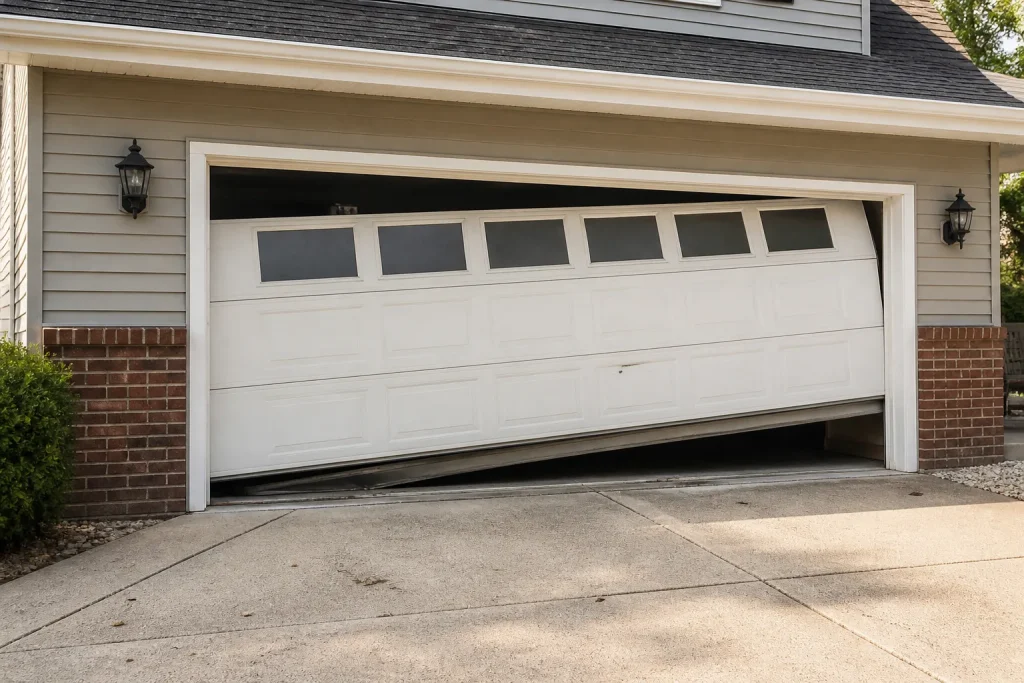
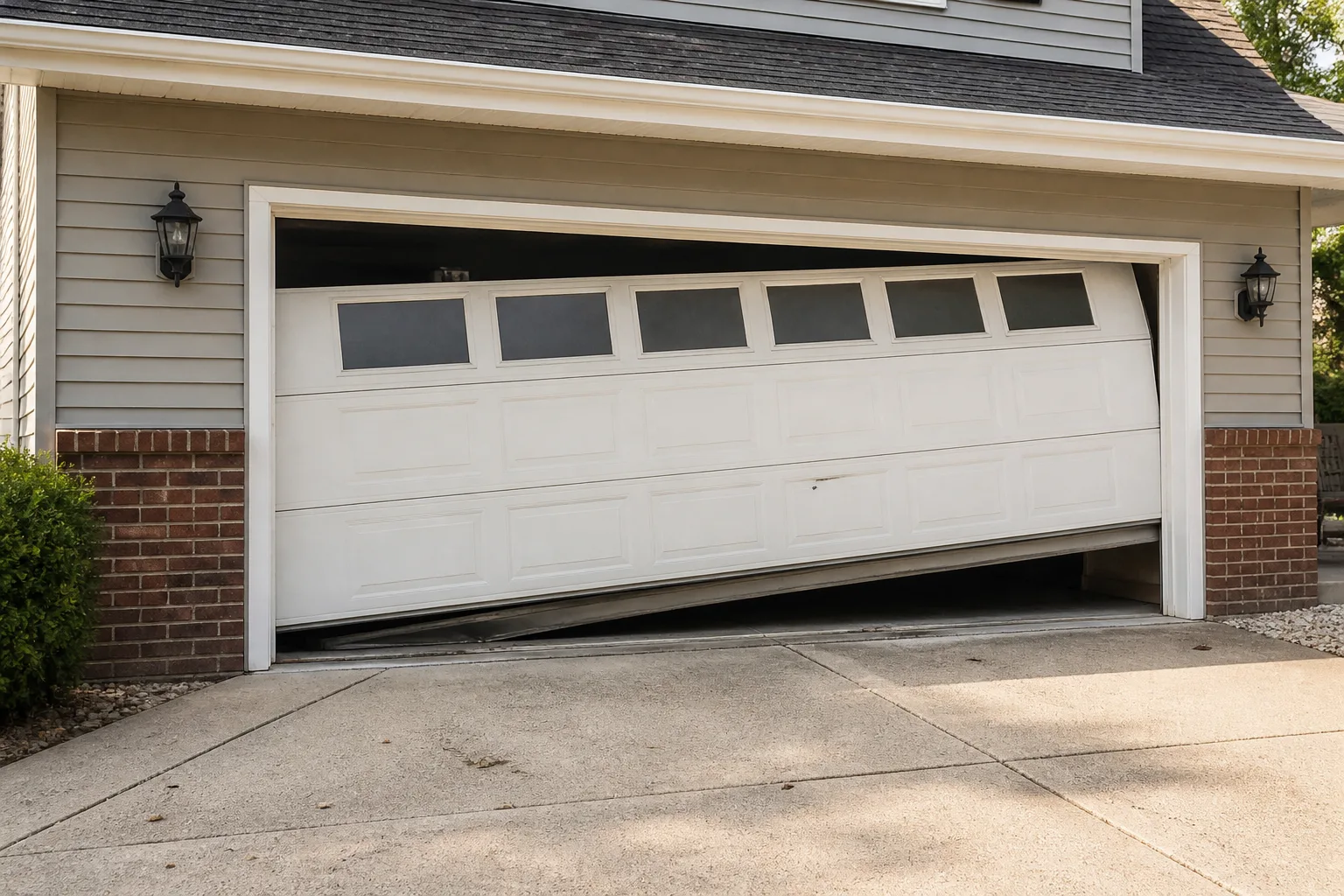
Springs and cables carry the full weight of the door, and they’re the two components you should never touch. But you can learn a lot just by looking at symmetry. A door that hangs straight is usually balanced. A door that hangs at a slant, with one side higher than the other, has a problem worth diagnosing.
To check balance safely, disconnect the opener (usually a pull cord) and lift the door by hand about halfway. A properly balanced door should stay roughly where you leave it. If it drops fast or won’t hold, the spring system isn’t doing its job. If it springs upward on its own, the springs are carrying too much tension. Either way, that’s a professional call. High-tension torsion and extension spring work is among the most dangerous repairs in the trade, and we handle it as a core service for exactly that reason.
For cable tension, look, don’t touch. A cable that’s hanging loose on one side, has visible fraying, or has a drum that’s not holding it neatly is a warning sign. If you see any of that, stop using the door and call us. We answer 24/7. Fast dispatch from 7am to 7pm, Sunday through Friday. Springs and cables fail with force, and nobody should be standing under a door with a slack cable when it does.
What balance problems look like day to day
A door that’s out of balance doesn’t always look broken. You’ll notice it in small ways. The opener seems to strain more. The door drifts down a few inches after you close it. You hear a louder thud at the end of the cycle rather than a soft stop. If you’re running a LiftMaster or Chamberlain opener, a struggling door can even trigger the opener’s safety reverse more often than it used to, because the motor is fighting weight it shouldn’t be lifting. That’s a mechanical problem, not an opener problem, and replacing the opener won’t fix it.
Cosmetic damage vs. structural warning signs in panels and frame
Not every dent is a problem. Not every misaligned panel is harmless. The difference is what the damage is telling you about the door’s structure and weather seal.
Cosmetic issues you can usually live with:
- A shallow dent in a single panel with no effect on operation
- Faded paint or scuffs on a working door
- A slightly loose handle or hinge that still holds
- Minor scratches on a bottom panel
Structural warning signs you shouldn’t ignore:
- Panels out of alignment – the door looks crooked when fully closed
- Gaps at the edges or bottom that weren’t there before
- Cracks in the panel seams, especially near hinges and struts
- A door that twists or bows visibly as it moves
- The frame pulling away from the wall at the corners
Panel misalignment in a Princeton Heights home is often a hinge, roller, or track issue rather than a bad panel, which is why we diagnose before recommending replacement. On brands like Clopay or Amarr with sectional panel construction, a single bad section or a bent track can make the whole door look wrecked when the actual fix is smaller than it appears. Fixed, not just patched, is how we approach it. If the door needs a full replacement rather than a repair, we’ll tell you that too, but we won’t recommend it because the panels look a bit crooked.
Opener behavior that hides a mechanical problem elsewhere
Here’s one of the patterns most homeowners miss: a struggling opener is often diagnosing something wrong with the door. The motor on a LiftMaster or Chamberlain unit is designed to compensate for a range of resistance. When the door gets heavier than it should, the opener works harder instead of complaining. That’s why the motor fails months after the real problem started.
Watch for these opener signals:
- Strain sounds – a hum or groan that wasn’t there before, then a hesitant start
- Frequent safety reverses – the door starts closing and reverses on its own before hitting anything
- Slower travel – the door takes noticeably longer to complete a cycle
- Remote range dropping – the remote works only up close, suggesting the opener is drawing more power than it should
- Wi-Fi or app disconnects – smart openers that keep dropping off the network can be a sign of a motor working beyond its limits
In our experience, a Genie or Craftsman opener that starts reversing more often than it used to is usually reporting a balance problem, not an internal fault. If your opener is calling for help, we cover both legacy and modern connected systems. Full garage door opener repair starts with diagnosing what the motor is reacting to, not swapping the unit.
How much time does each warning sign give you?
Timelines vary with the age of the door and how much it runs per day, but here’s the rough pattern we see. Think of these as guidelines, not promises – the sooner you call, the more options you have.
- Slack or frayed cable: hours. Stop using the door today.
- Broken spring (door won’t lift or weighs twice as much): hours. Don’t force it with the opener.
- Door reverses or stops partway: hours to a day. This is often a sensor issue and usually an easy fix, but not one to leave.
- Speed inconsistency or vibration: one to four weeks before something breaks downstream.
- New sounds at a specific point: a few days to a couple of weeks, depending on what’s causing them.
- Panel misalignment or a crooked door: two to eight weeks before the wear spreads to hinges and rollers.
- Opener strain or extra presses: a month or two, but the longer you wait the more likely the opener goes with it.
If you’re not sure where your door sits on that list, a free estimate takes the guesswork out. Local patterns help too – Princeton Heights doors work hard in summer heat, and heat accelerates wear on springs and cables in ways a homeowner can’t see until something gives.
When to call a professional instead of waiting it out
Call us now, not later, if any of the following apply: the door won’t lift by hand, you see a broken spring, the cable looks slack or frayed, the door is hanging crooked, or the opener keeps reversing without an obstruction. Those are the cases where waiting turns a repair into a bigger repair, or worse, injury. Springs and cables carry real stored energy, and even careful homeowners get hurt trying to adjust them.
For cosmetic wear, a slightly louder door, or an opener that’s just a bit slow, you have room to make a plan. Call (855) 799-9554 and we’ll talk through what you’re seeing. We answer 24/7, and a call outside dispatch hours is booked into the next opening, Sunday through Friday, 7am to 7pm. Free estimates, and the price is agreed before any work starts.
Related services in Princeton Heights: if the warning signs point to wear beyond a repair, our team handles garage door repair and full garage door installation for doors that are past saving. Start with Garage Door Repair Princeton Heights if you’re not sure which applies.
The Bottom Line
Garage door failures rarely come without a heads-up. Speed inconsistency, new sounds at the same point in travel, partial movement, and extra button presses are all the door telling you something is drifting before it breaks. Check symmetry by looking, never by touching the springs or cables. Treat opener strain as a signal about the door, not just the motor. And act within days, not weeks, once a warning sign shows up – small repairs on this schedule cost less than failures.
Our technicians have up to 11 years of experience across eight major brands, including Craftsman and Raynor, and we source the right part to keep turnaround short. If you’re in Princeton Heights and need help, Garage Door Repair Princeton Heights offers free estimates – call (855) 799-9554.
Frequently Asked Questions
A tune-up covers lubrication, balance adjustment, and tightening hardware on a door that’s working fine. Service is for a door showing a symptom: speed changes, new noises, partial movement, or opener strain. If you can name a specific behavior change, it’s time for service, not a tune-up. Call (855) 799-9554 for a free estimate and we’ll tell you which one you need.
You can look, but you shouldn’t touch. Visual signs of spring trouble include a visible gap in a torsion spring, a door that won’t stay halfway open, or one side that feels far heavier than the other. Adjusting or replacing a high-tension spring yourself is dangerous. We handle spring repair in-house, and it’s one of the main reasons homeowners call us.
Two presses usually means a safety sensor is drifting out of alignment or getting blocked by dust or spiderwebs. It can also happen when the door is binding and the opener’s safety reverse triggers on the first press. Clean the sensor lenses first, and if that doesn’t fix it, it’s worth a professional look before the door fails to close when you need it to.
No. We quote the work and you agree to it before any repair starts. The written estimate sets the final price. If we find a second issue while working, we stop and talk it through with you first – we don’t add charges without your sign-off. Call (855) 799-9554 for an exact quote. Estimates are free.
Written by the team at Garage Door Repair Princeton Heights.
Need Garage Door Help?
Call Garage Door Repair Princeton Heights - the local pro we connect you with is licensed and insured, here with fast help in Princeton Heights.
(855) 799-9554